



RUSSIA UKRAINE
Zelenskyy meets European leaders in London amid Russian strikes
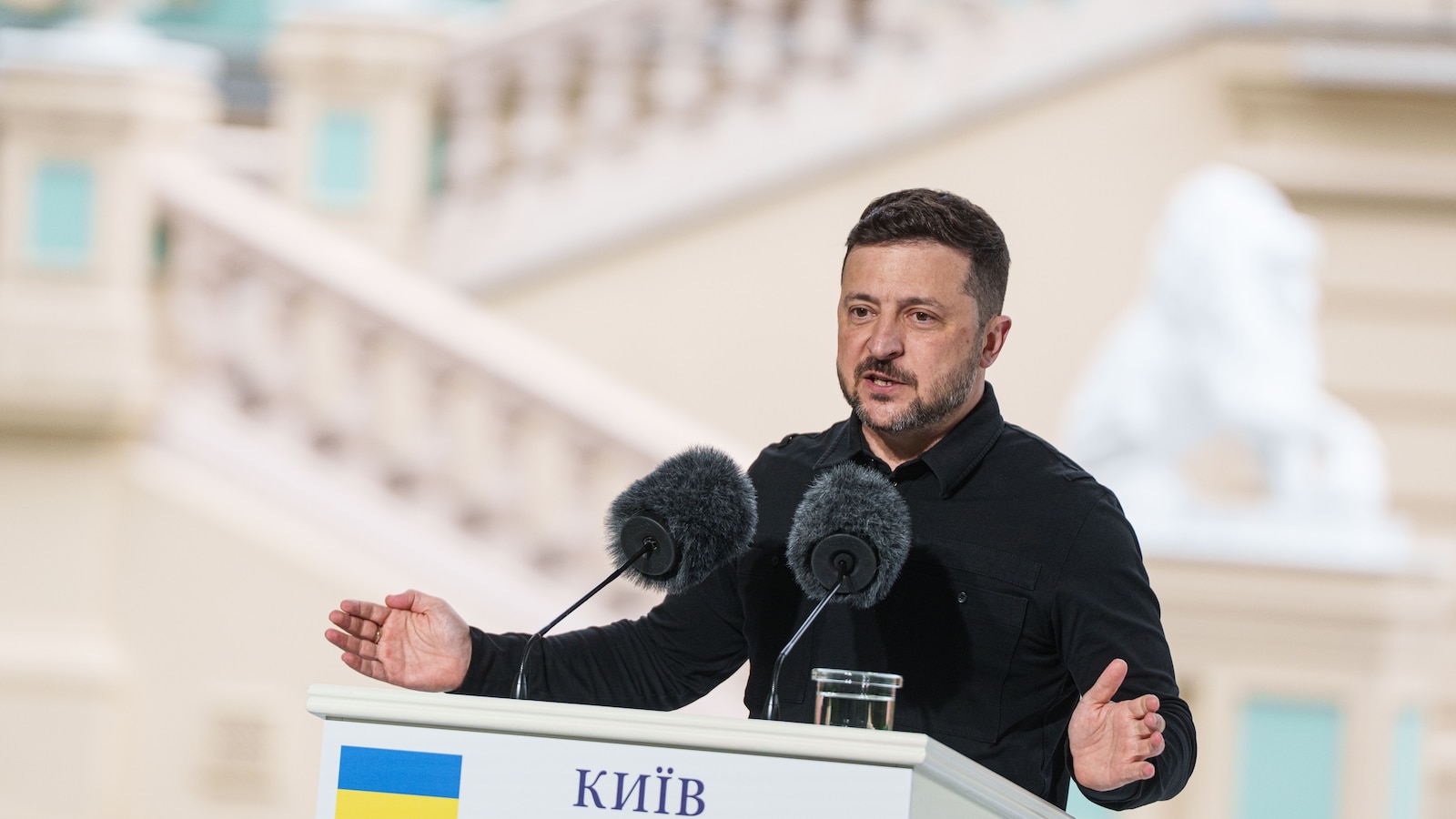
Ukrainian President Volodymyr Zelenskyy met UK Prime Minister Keir Starmer, French President Emmanuel Macron and German Chancellor Friedrich Merz in London to coordinate support for Ukraine and Europe’s role in any peace talks.
Ukrainian President Volodymyr Zelenskyy met UK Prime Minister Keir Starmer, French President Emmanuel Macron and German Chancellor Friedrich Merz in London to coordinate support for Ukraine and Europe’s role in any peace talks.





What This is
- Ukrainian President Volodymyr Zelenskyy met UK Prime Minister Keir Starmer, French President Emmanuel Macron and German Chancellor Friedrich Merz in London to coordinate support for Ukraine and Europe’s role in any peace talks.
- The leaders discussed further military assistance, especially air defence, and possible security guarantees for Ukraine involving the UK, France, Germany and a wider “coalition of the willing.”
- The meeting took place amid continued long-range attacks by both sides, including Ukrainian strikes deep inside Russia and large Russian drone barrages over Ukraine.
- Russian drone strikes in Ukraine killed three people at a bus stop in Zaporizhzhia, according to reporting on the attack.
- A Russian drone strike hit near the spent nuclear fuel storage site close to Chornobyl/Chernobyl, raising safety concerns and prompting attention from the International Atomic Energy Agency.
- Russia rejected Zelenskyy’s proposal for face-to-face talks, keeping the prospect of direct leader-level negotiations uncertain.
- European leaders framed the London talks as part of a broader effort to increase pressure on Russia while coordinating support ahead of future meetings, including a planned July session in Paris for the coalition format.
Why This Matters
- The London meeting tests whether Europe can translate political unity into sustained military support and credible security guarantees that deter future Russian attacks.
- Talks about a “coalition of the willing” signal a shift from ad hoc aid toward longer-term commitments that could shape Europe’s security order and burden-sharing.
- Strikes near nuclear-related infrastructure underscore the wider transnational risks of the war, including potential radiological or environmental emergencies.
- Russia’s rejection of face-to-face talks reduces near-term diplomatic options and increases the likelihood that battlefield pressure will dominate decisions.