



GOVERNMENT TRANSPARENCY
U.S. officials consider taking equity stakes in AI companies
The Trump administration is exploring whether the U.S. government should take equity stakes in leading artificial intelligence companies.
The Trump administration is exploring whether the U.S. government should take equity stakes in leading artificial intelligence companies.




What This is
- The Trump administration is exploring whether the U.S. government should take equity stakes in leading artificial intelligence companies.
- President Trump has publicly said the U.S. may take equity stakes in AI companies.
- OpenAI CEO Sam Altman has discussed a possible government stake in OpenAI, including donating equity to help seed a proposed public investment fund.
- Officials have held preliminary talks with major AI companies about acquiring shares, potentially through voluntary ceding of equity rather than a traditional purchase.
- One proposal discussed is a “Public Wealth Fund” or “AI sovereign wealth fund” that would invest the equity and direct returns to public purposes, including possible household dividend payments.
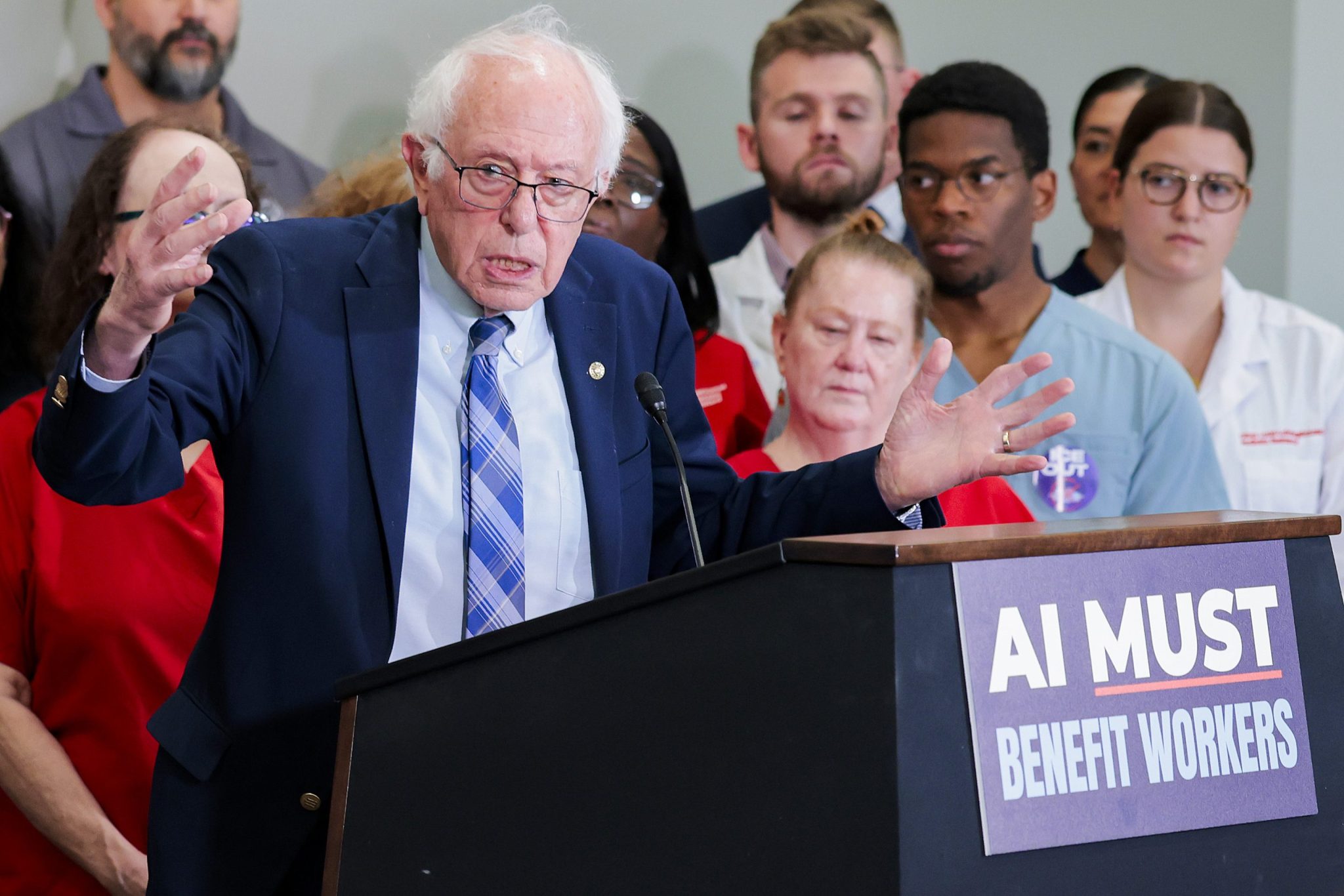
- Sen. Bernie Sanders has proposed a bill to fund an American AI sovereign wealth fund by requiring a one-time 50% tax paid in shares by major AI companies, paired with citizen voting rights and board representation.
- The reported talks include OpenAI and Anthropic as they prepare for possible initial public offerings.
- The discussions are described as preliminary, with no finalized investment or governance terms for any government stake.
- The equity-stake idea is being discussed alongside other administration actions on AI oversight, including voluntary pre-release government access or reviews of AI models.
Why This Matters
- Government ownership in frontier AI risks conflicts of interest because the state would both regulate firms and profit from them.
- Any public-dividend or shared-ownership plan would reshape how AI-generated wealth is distributed and could change public expectations of who benefits from automation.
- Equity-for-access discussions raise hard transparency questions about what AI safety testing the public can scrutinize without handing the government or rivals sensitive capabilities.
- A U.S. precedent for state stakes in strategic tech could alter competition, investment incentives, and international industrial-policy dynamics.