



CULTURE SOCIETY
Trump proposes renaming Lake Ontario 'Lake America' amid rising U.S.-Canada tensions
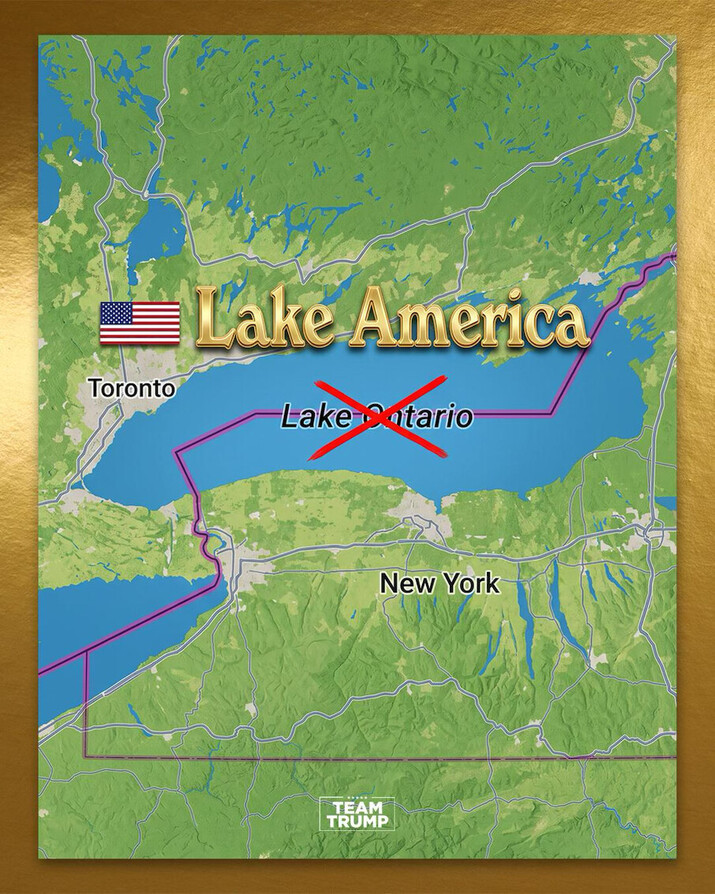
President Donald Trump says he is considering renaming Lake Ontario “Lake America” as the U.S. and Canada escalate a tariff-driven trade dispute, prompting pushback from Canadian officials and questions about whether a U.S.-only name change would mean anything beyond federal U.S. use.
President Donald Trump says he is considering renaming Lake Ontario “Lake America” as the U.S. and Canada escalate a tariff-driven trade dispute, prompting pushback from Canadian officials and questions about whether a U.S.-only name change would mean anything beyond federal U.S. use.
Corroboration
LowMedHigh






Confirmed by 64+ sources.
What This is
- Trump posted that he is “seriously considering” renaming Lake Ontario “Lake America,” and shared a graphic showing the change.
- The renaming threat came as U.S.-Canada trade talks broke down and both sides imposed or announced steep tariffs on billions of dollars of goods.
- Canada announced “dollar-for-dollar” counter-tariffs on a large list of U.S. products, with rates that can reach 50%.
- Canadian officials and politicians largely dismissed the name change as symbolic, saying it will still be called Lake Ontario in Canada.
- Several reports say the U.S. can change how federal agencies label the lake, but it cannot force Canada or international bodies to adopt a new name.
- Historians and Indigenous-language references note “Ontario” has Iroquoian origins and predates both modern Canada and the United States.
- Some coverage warns a unilateral U.S. renaming could create practical confusion for maps, paperwork, and cross-border business, even if it is mostly symbolic.
- The episode fits a broader pattern of Trump promoting or ordering high-profile renamings, including the Gulf of Mexico and other federal names and sites.
- U.S. and Canadian leaders also traded personal insults, and Ontario’s premier said he wants tensions to cool and talks to resume.
Why This Matters
- It shows how symbolic cultural fights can be used to escalate a real economic conflict.
- It raises questions about who gets to define shared places, and how national pride can clash with Indigenous history.
- It tests how resilient U.S.-Canada ties are when leaders use public insults and headline-grabbing moves.
- It illustrates the limits of presidential power over international norms, even if U.S. agencies can change their own labels.