



CHINA
Trump hosts Xi for talks on trade, AI and Taiwan
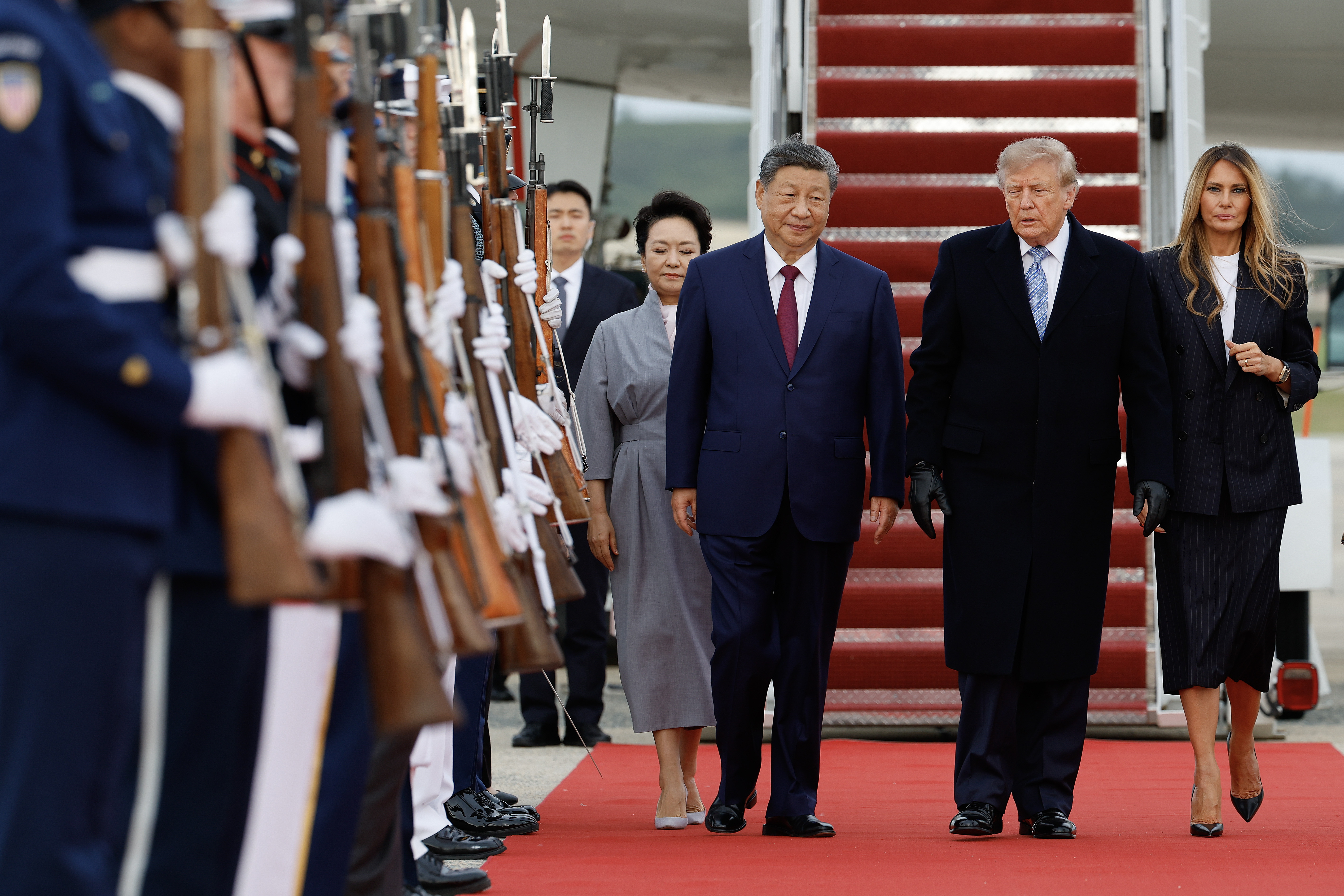
President Donald Trump welcomed Chinese President Xi Jinping to Washington for a three-day state visit centered on trade negotiations, AI risk management, Taiwan arms sales and the Iran war.
President Donald Trump welcomed Chinese President Xi Jinping to Washington for a three-day state visit centered on trade negotiations, AI risk management, Taiwan arms sales and the Iran war.
Corroboration
LowMedHigh






Confirmed by 75+ sources.
What This is
- President Trump welcomed Xi to Washington for a highly ceremonial three-day state visit that included closed-door talks, a military review, and a state dinner.
- The U.S. and China agreed to extend their trade truce for about two months, until Jan. 10, while negotiators continue working on tariffs and related trade restrictions.
- Trade talks are also tied to supply-chain leverage, including China’s controls over rare-earth exports that are essential for cars, electronics, and defense production, as well as possible Chinese purchases of U.S. farm goods and Boeing aircraft.
- Artificial intelligence was a major agenda item, and officials discussed an “incident notification” channel or hotline to warn each other about serious AI-related national security risks.
- Both sides are expected to continue tightening and contesting tech controls, especially limits on advanced chips and other tools used to build high-end AI systems.
- Taiwan arms sales were on the summit agenda, although no change in U.S. policy announced.
- Iran war also loomed over the talks, prompting U.S. pressure on China regarding Tehran’s oil revenues and allegations that Chinese firms are supporting Iran’s military capabilities.
Why This Matters
- If Washington and Beijing cannot manage their rivalry, small disputes could spiral into military or economic crises.
- Rare-earth and chip controls show how trade tools can become national security weapons, raising costs and supply risks for many countries.
- Even a limited AI incident channel could reduce the chance that an AI mistake or cyber incident triggers a wider confrontation.
- Decisions regarding Taiwan shape the credibility of U.S. security promises in Asia and Beijing’s calculations about coercion or force.