



AI
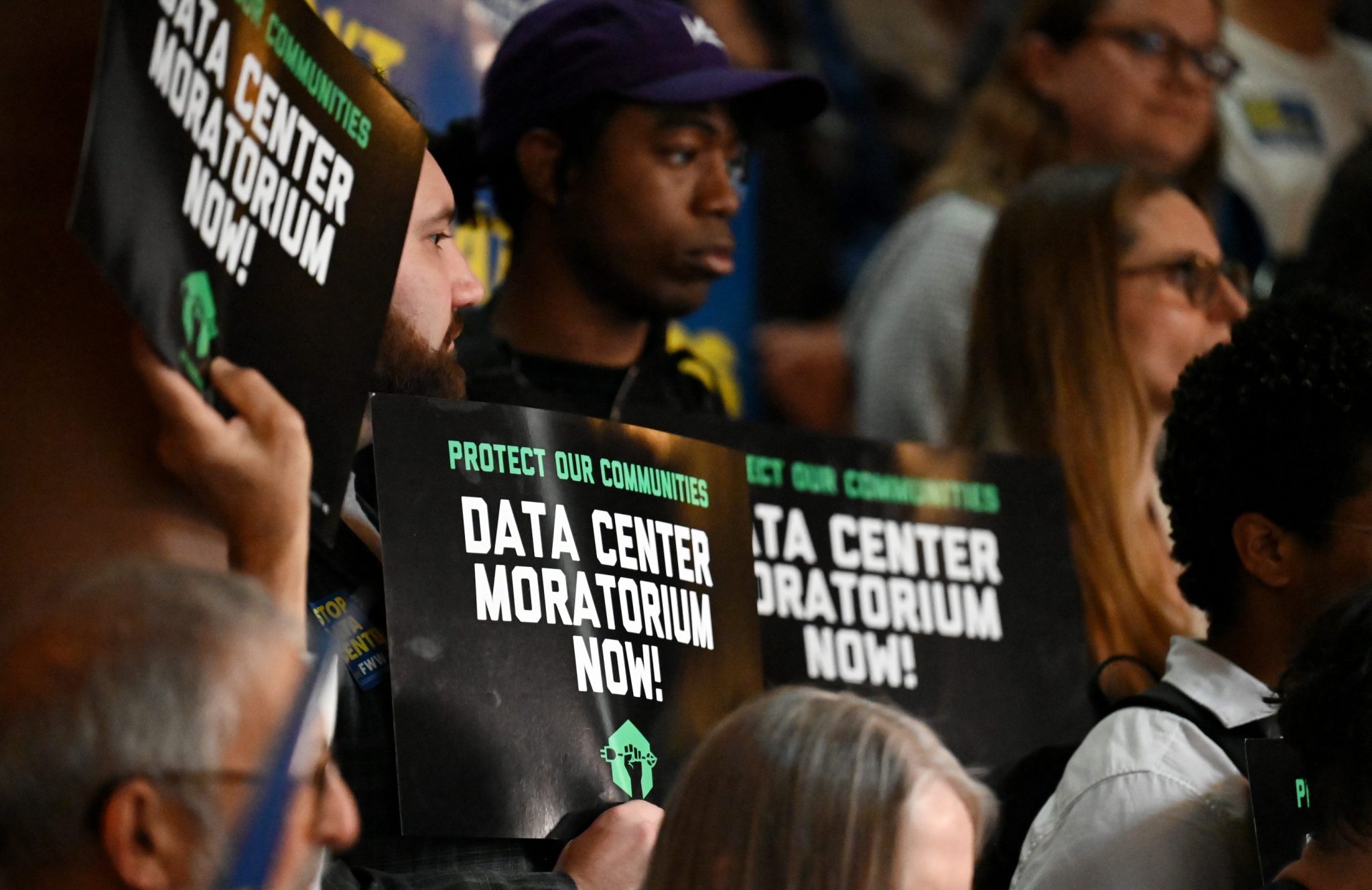
Local officials and residents oppose planned data centers over power use and emissions
Proposed AI data centers in several U.S. regions are facing growing local opposition centered on electricity demand, emissions, and other environmental impacts.
Proposed AI data centers in several U.S. regions are facing growing local opposition centered on electricity demand, emissions, and other environmental impacts.
Corroboration
LowMedHigh






Confirmed by 6+ sources.
What This is
- Proposed AI data centers in several U.S. regions are facing growing local opposition centered on electricity demand, emissions, and other environmental impacts.
- In Box Elder County, Utah, Kevin O’Leary has proposed an AI data-center campus of roughly 7.5 gigawatts on 10,000–13,000 acres tied to a larger 40,000-acre development with an on-site natural-gas power plant.
- Utah county commissioners voted to advance the project, while residents and environmental experts have raised concerns about water use, impacts on the shrinking Great Salt Lake, added emissions, and a rushed public-review process.
- A proposed $500 million Stak Energy data center on Alaska’s North Slope would cover about one square mile and could ultimately produce up to three gigawatts of power, with the state issuing a preliminary decision to lease land while public comment is open.
- The Alaska proposal would depend on a new natural-gas pipeline and on-site gas-fired turbines, prompting questions about gas supply, permitting, turbine availability, and greenhouse-gas impacts despite potential cooling advantages in the Arctic.
- SpaceX has disclosed spending about $2.8 billion on portable gas turbines to power large AI data centers used by Elon Musk’s xAI and leased servers to Anthropic, reflecting tight electricity supply for new data-center load.
- SpaceX’s turbine deployments have drawn lawsuits, advocacy complaints, and regulatory scrutiny focused on emissions and whether the turbines are avoiding stricter permitting requirements.
- An Arizona State University study in the Phoenix area found data centers can measurably warm nearby neighborhoods, with downwind areas up to about 4 degrees hotter and elevated temperatures extending roughly a third of a mile.
- Research summarized in Environmental Research Letters finds data center electricity demand could raise national wholesale power prices 6–29% by 2030, with localized spikes up to about 57% and CO2 emissions increases up to about 28% depending on how
- A Gallup poll found 71% of U.S. adults oppose building AI data centers near them, with opposition driven by electricity and water use concerns and support often tied to expectations of jobs and tax revenue.
Why This Matters
- The conflict tests whether communities that host infrastructure should bear local environmental and health burdens for widely distributed digital services.
- Large new electricity loads can reshape utility planning and household bills, creating distributional fights over who pays for grid upgrades and generation.
- Greater reliance on gas-fired power for data centers can lock in emissions and slow climate targets, while alternative buildouts raise land-use and siting tradeoffs.
- Heat and water impacts add a public-health and resilience dimension, especially in already hot or water-stressed regions.