



FOREIGN AFFAIRS
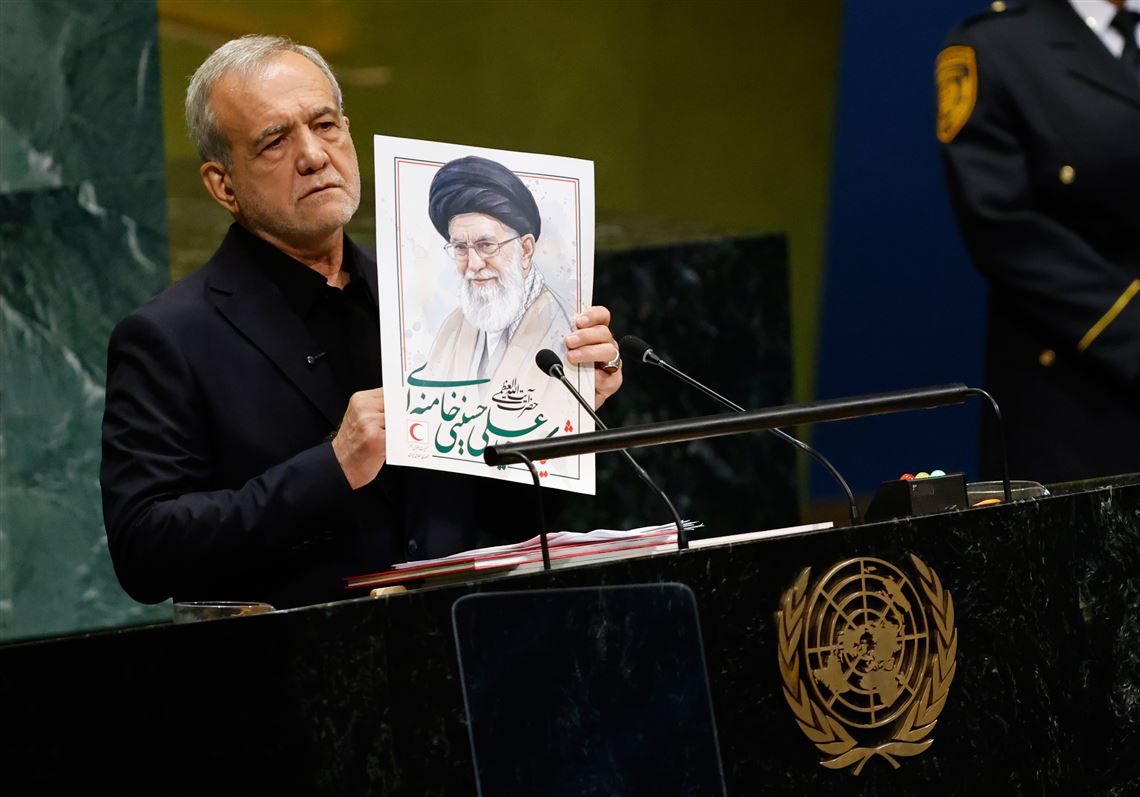
Iranian President Masoud Pezeshkian calls Iran a ‘victim of terrorism’ in wartime U.N. address
Iranian President Masoud Pezeshkian used a rare wartime speech at the U.N. General Assembly to accuse the U.S. and Israel of attacking Iran and killing civilians, as Washington and Tehran also pursued Qatar-mediated talks on ending the war and shipping through the Strait of Hormuz.
Iranian President Masoud Pezeshkian used a rare wartime speech at the U.N. General Assembly to accuse the U.S. and Israel of attacking Iran and killing civilians, as Washington and Tehran also pursued Qatar-mediated talks on ending the war and shipping through the Strait of Hormuz.
Corroboration
LowMedHigh






Confirmed by 73+ sources.
What This is
- Iranian President Masoud Pezeshkian delivered a rare wartime address to the U.N. General Assembly in New York.
- Pezeshkian said Iran has been a “victim of terrorism,” rejected being labeled terrorists, and accused the United States and Israel of attacking Iran and civilians.
- He tried to reinforce his claims by displaying photos of casualties and figures he said were killed in strikes, including children.
- Pezeshkian criticized U.S. pressure and sanctions, saying more “bullying” would produce more resistance, while also saying Iran is willing to negotiate but not under threats.
- His address followed Trump’s warning that the United States could “annihilate” Iran, even as Trump said an agreement remained possible.
- Qatar facilitated contacts between U.S. and Iranian officials on the sidelines of the U.N. meetings.
- A major focus of the talks has been the Strait of Hormuz, with Iran floating conditions for reopening the waterway and the U.S. urging free passage.
Why This Matters
- The speeches show how both governments use wartime narratives to shape international opinion and exert diplomatic pressure.
- Navigation through the Strait of Hormuz matters because it is a key route for global oil shipments, and disruptions can quickly drive up energy prices.
- Competing claims about self-defense and civilian harm shape how other countries judge the war’s legitimacy.
- Qatar’s role underscores the importance of intermediaries in maintaining communication between wartime adversaries.