



ECONOMY
California governor candidates debate policy differences
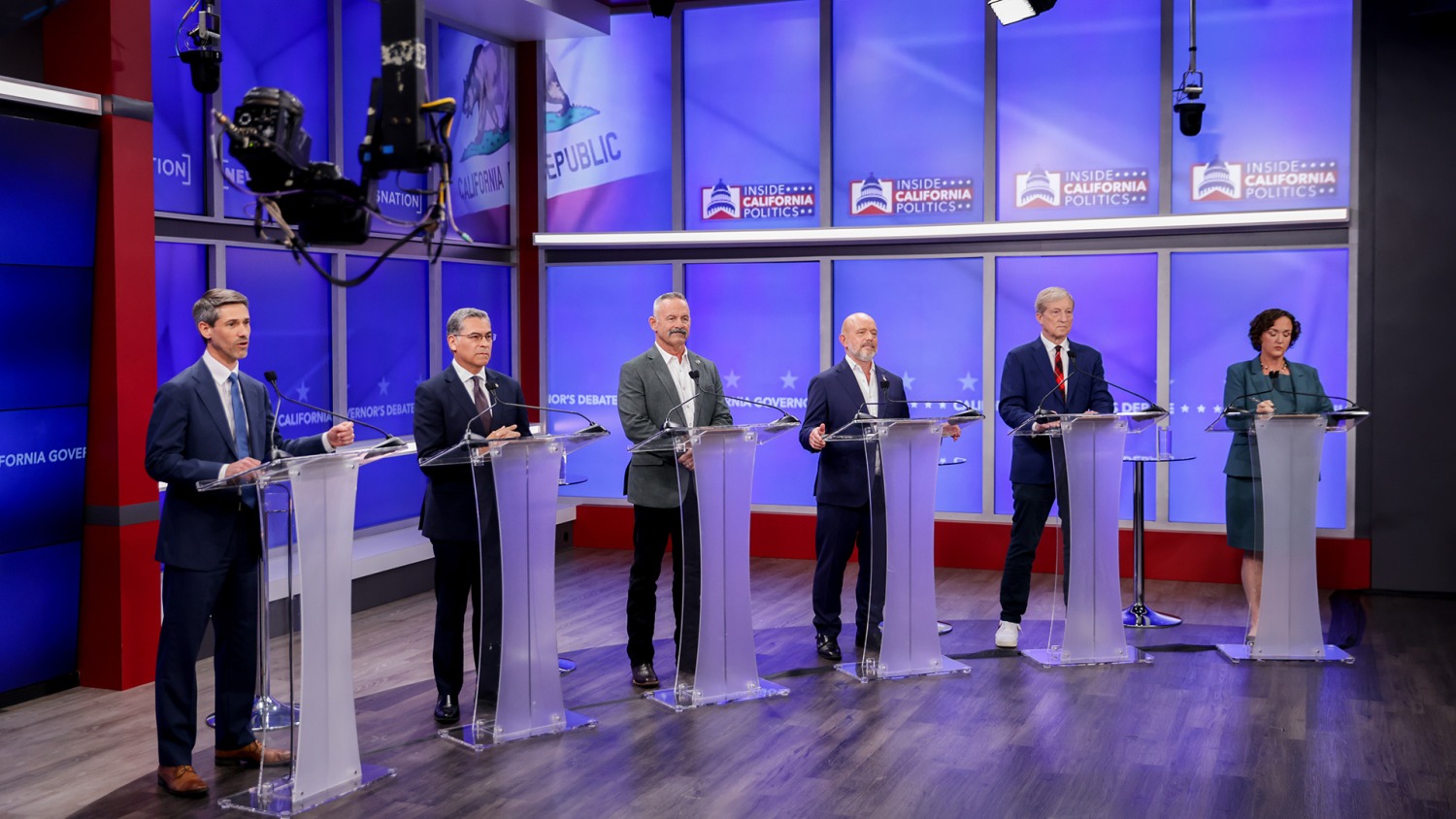
Six leading candidates for California governor met in a 90-minute televised debate in San Francisco as the wide-open June 2 top-two primary approaches.
Six leading candidates for California governor met in a 90-minute televised debate in San Francisco as the wide-open June 2 top-two primary approaches.
Corroboration
LowMedHigh






Confirmed by 25+ sources.
What This is
- Six leading candidates for California governor met in a 90-minute televised debate in San Francisco as the wide-open June 2 top-two primary approaches.
- The stage included Democrats Katie Porter, Tom Steyer, Xavier Becerra and Matt Mahan and Republicans Steve Hilton and Chad Bianco, selected via polling-based qualification rules.
- The debate was the first major forum since Democrat Eric Swalwell withdrew amid sexual-assault and misconduct allegations, reshuffling the race with many voters still undecided.
- Candidates focused heavily on cost-of-living pressures, especially housing affordability and homelessness, as central issues for California voters.
- Housing proposals ranged from streamlining permitting and lowering fees to zoning changes, modular construction, and development near public transit.
- Candidates also clashed over taxes, gas and energy prices, and other governance priorities, with partisan blame over the state’s current problems.
- The forum featured discussion of proposals to restrict minors’ social media use and raised concerns about the risks of artificial intelligence.
- Campaign shakeups and controversies were part of the debate, including questions about what Becerra knew about Swalwell and Porter responding to viral reports about her management style.
- The top-two primary system, which sends the two highest vote-getters to November regardless of party, is shaping strategy and fueling concern about who could advance.
Why This Matters
- Because California is the largest U.S. state economy, the next governor’s approach to housing supply, homelessness, and energy costs can shift prices, investment, and labor mobility nationwide.
- The top-two system can produce outcomes that do not mirror party registration, making coalition-building and vote-splitting decisive for who governs.
- Debates over permitting, zoning, and fees show how local rules translate into statewide affordability and inequality, shaping who can live near jobs and schools.
- Proposals targeting youth social media use and attention to artificial-intelligence risks preview how states may regulate emerging technologies when federal rules lag.