



JUSTICE PUBLIC SAFETY
Appeals court weighs Trump’s authority to deploy National Guard for D.C. crime patrols
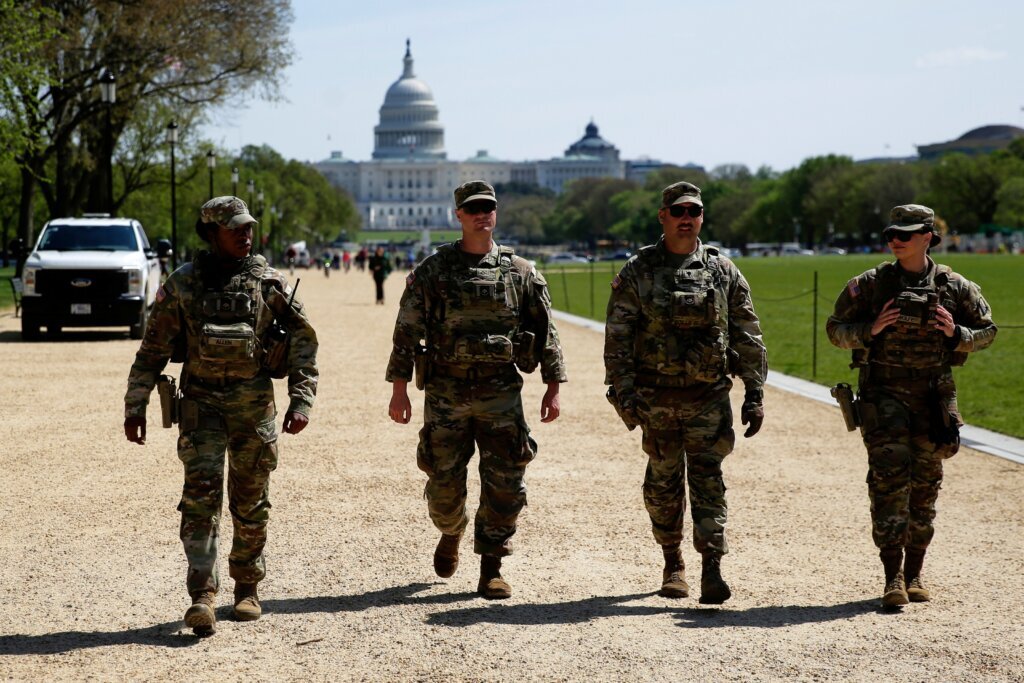
A federal appeals court is weighing whether President Trump had legal authority to deploy and keep the D.C. National Guard in Washington for crime patrols after the D.C. attorney general sued and a lower-court ruling against the deployment was paused during the appeal.
A federal appeals court is weighing whether President Trump had legal authority to deploy and keep the D.C. National Guard in Washington for crime patrols after the D.C. attorney general sued and a lower-court ruling against the deployment was paused during the appeal.
Corroboration
LowMedHigh






Confirmed by 15+ sources.
What This is
- A federal appeals court heard oral arguments over whether President Donald Trump lawfully deployed the National Guard to conduct crime patrols in Washington, D.C.
- During the hearing, judges pressed government attorneys on whether using military troops for routine neighborhood policing violates the Posse Comitatus Act, a law that limits the military’s role in domestic law enforcement.
- D.C. Attorney General Brian Schwalb initiated the legal challenge under the District of Columbia Home Rule Act, arguing the executive branch improperly bypassed local authority.
- A federal district judge previously ruled the deployment was unlawful, but that decision remains paused while the D.C. Circuit Court of Appeals considers the government's appeal.
- The deployment began in August 2025, with troop levels fluctuating from an initial peak of roughly 5,000 down to approximately 2,900 active personnel in recent months.
- The Defense Department extended the mission through January 2029, with the administration requesting 1,500 additional troops ahead of the nation’s 250th birthday celebrations.
- Guard units have primarily conducted visible foot patrols, traffic details, and transit security, with no civilian casualties or weapons discharges reported during routine community patrols.
Why This Matters
- The ruling could expand or limit when presidents use troops for routine policing, not just short-term emergencies.
- It could clarify how much control D.C. residents have over local public safety when federal leaders step in.
- How courts interpret limits on military involvement in law enforcement may shape responses to crime and major protests.
- A years-long Guard mission raises accountability questions about spending, contracting, and clear end dates for deployments.